Quick answer by project type
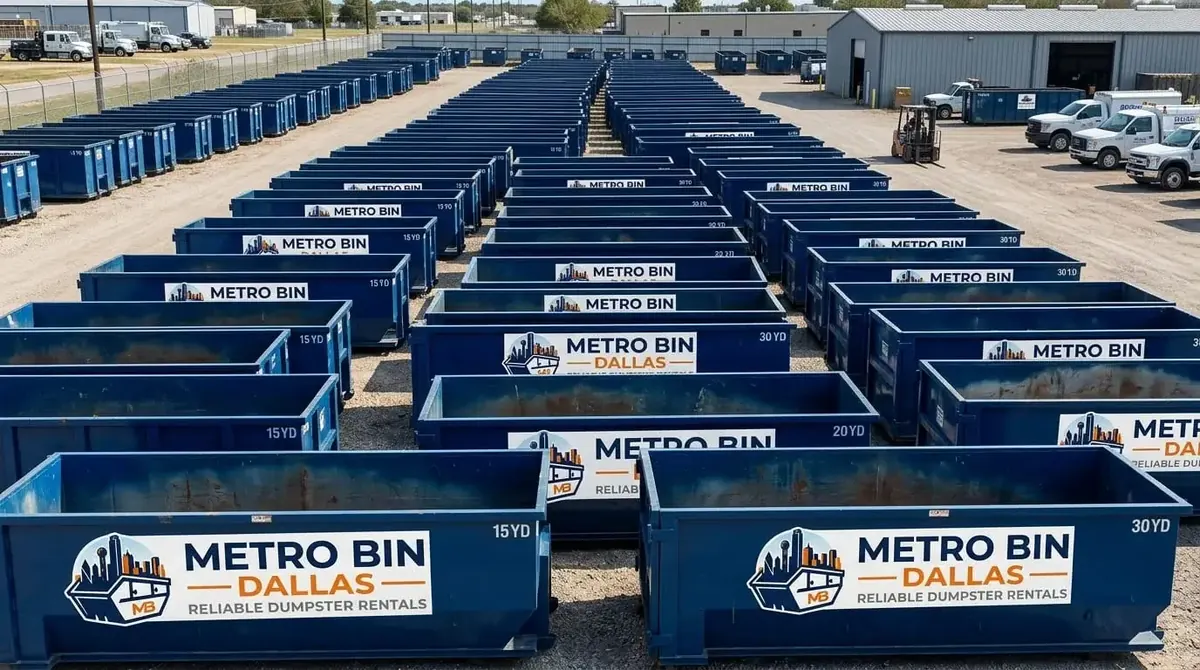
For a home renovation in Dallas, a 20 yard dumpster — about six pickup truck loads — fits most single-room to multi-room jobs and is the size we rent most. Go 10 yard for a bathroom remodel, a garage cleanout or anything heavy, 15 yard for a kitchen, a fence line or a floor, 30 yard for a whole-house renovation or a double-layer roof, and 40 yard for demolition or commercial work. Not sure? Call (214) 239-1274 and we size it for you.
Count the debris in pickup loads
Walk the job and estimate how many full-size pickup beds it would take. Roughly: 3 loads is a 10 yard, 4–5 is a 15, 6 is a 20, 9 is a 30, 12 is a 40. Most people under-count by about a third, so when the number lands between two sizes, go up.
Check the weight, not just the volume
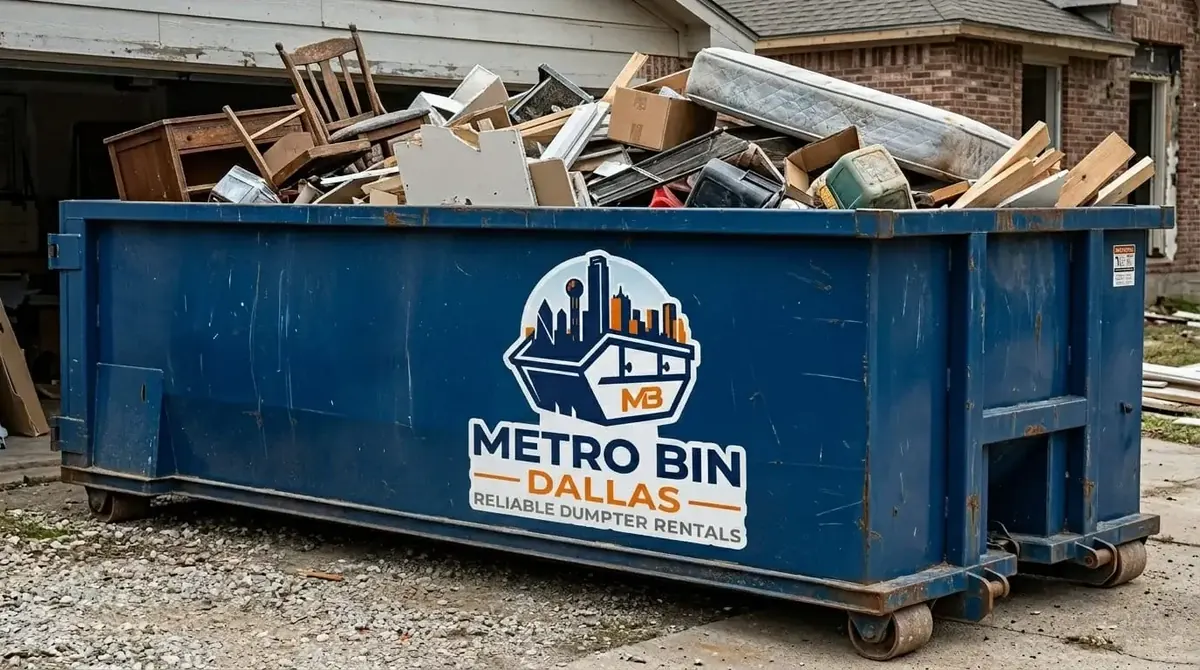
Volume and weight are two separate limits, and dense material hits the weight line long before the container looks full. Concrete, brick, roofing shingles, slab pieces, soil and tile are the North Texas regulars — the black-clay soil here is heavy when it is wet, and a hail-year roof can be two layers of shingle. For those, the right answer is usually a 10 yard loaded level with the sides, not a 20 heaped to the rail, because a loaded 20 of rubble is more than the truck can lift safely and more than the included tonnage covers.
Why weight matters to the price: the landfills and transfer stations around DFW charge by the ton — the North Texas Municipal Water District's regional facility, which the Collin County cities route to, listed $43.35 a ton in its December 2024 schedule, and Mesquite's contractor rates list $33.37 a ton — and every flat quote we give includes a stated tonnage. Load heavy material level and you stay inside it.
Measure the drop spot
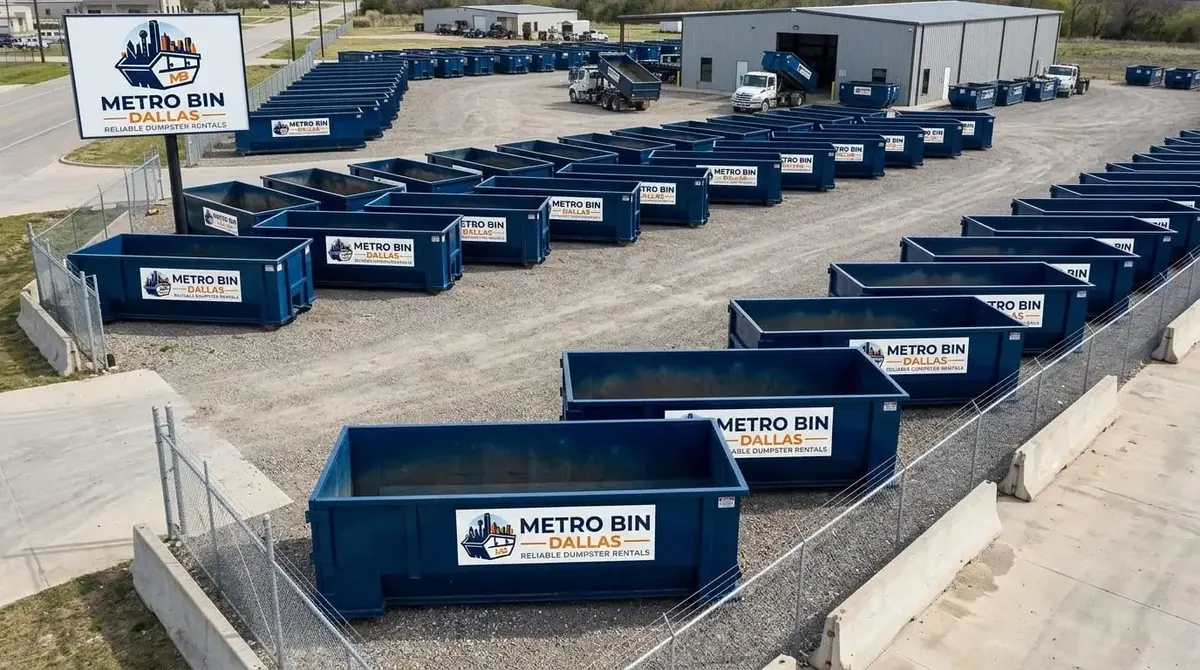
A 10 yard is about 12 feet long and needs roughly 25 feet of straight, level driveway for the truck to set it down. A 20 or 30 is about 22 feet long and wants 35 feet. A 40 needs about 40 feet and overhead clearance for the lift. Low branches, power lines and alley-loaded garages are the usual DFW obstacles.
If the container cannot fit on your property, check your city's rule before assuming the street is an option. In Dallas a container in the street is a right-of-way matter for Public Works (214-948-4290); Cedar Hill bars any obstruction in the right-of-way outright; Lewisville requires containers solely on private property. The city-by-city guide covers every city we serve.
When in doubt, size up
A second haul costs more than the step up to the next size. If you are between a 15 and a 20, take the 20. If you are between a 20 and a 30 and the material is light, take the 30; if it is heavy, take two 10s or a 20 with a planned swap. Or describe the job on the phone and let us do the arithmetic — it takes about a minute.